

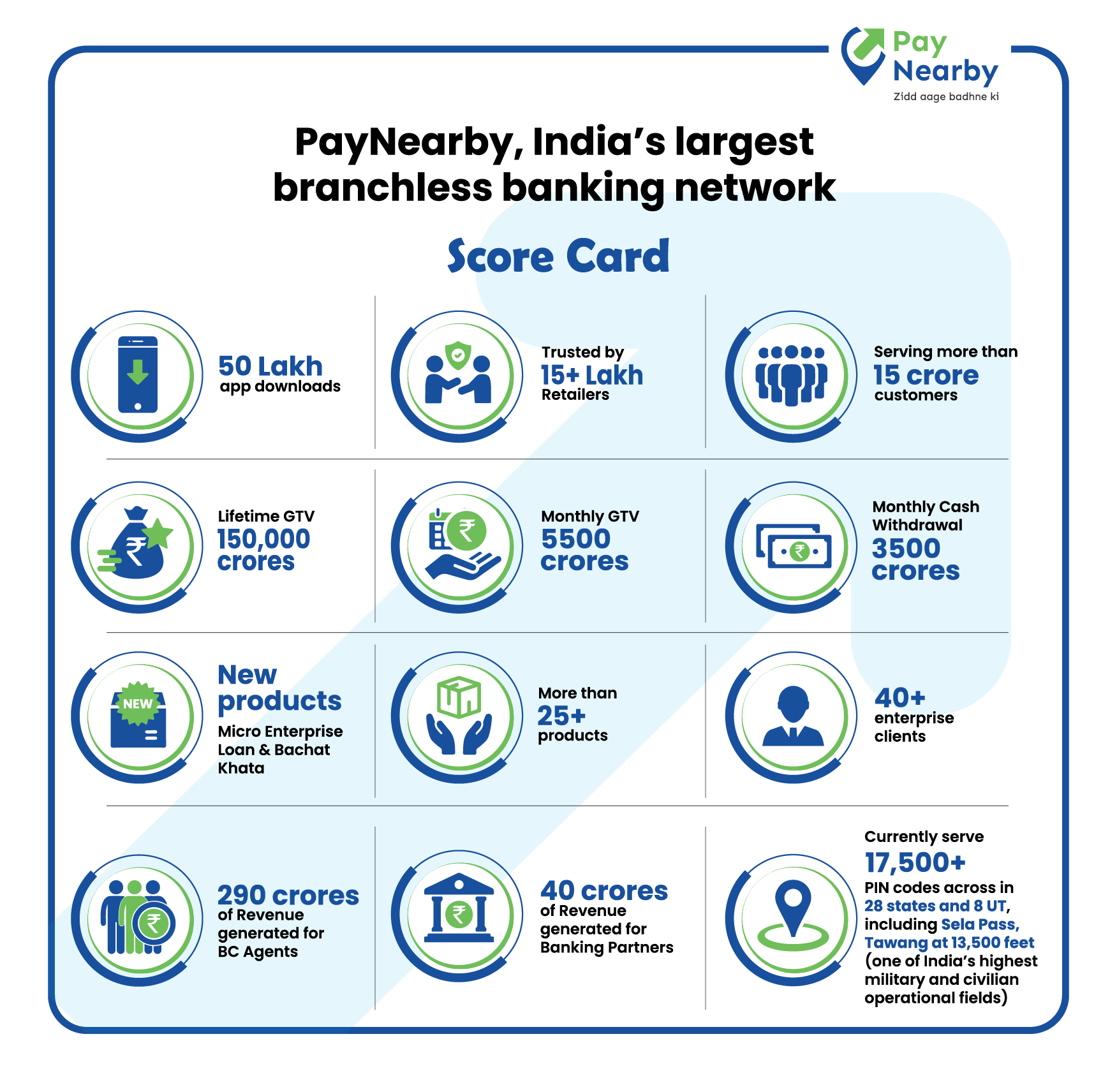
Amidst pandemic, PayNearby distributed Rs. 54,000 Cr of assisted digital services in FY 20-21

 On an average, PayNearby disbursed Rs. 3,000+ Crore of AePS withdrawals per month in FY 20-21
 Highlighted the role of agent banking network in enabling cash in the hands of people during pandemic
 Overall value of assisted digital financial transactions at PayNearby retail stores stood at ~Rs. 54,000 Cr (USD 7.5Billion) in FY 20-21
 After an initial drop, resurgence of remittance in the second half of the year, combined with increased offtake in insurance, digital payments, Micro ATM, recharges and bill payment contributed to the growth
 New categories, including flexi savings product, Bachat Khata saw a growing offtake in the second half of the year
 Online offline convergence, where ecommerce companies, online education and video streaming providers made their services available through PayNearby retail stores, was another rising category
 Assisted financial transactions were registered across 17,500 PIN codes in the country, with a new milestone of 50 Lakh app downloads achieved
 PayNearby generated ~Rs. 290 Crores (USD 40 Million) of revenue for its banking agents, and about ~Rs. 40 Crores (USD 6 Million) of fee was paid to its banking partners in the last financial year

PayNearby, India’s leading branchless banking and digital payments network today announced that it has recorded Gross Transaction Value (GTV) worth Rs. 54,000 Crores in FY 20-21, with an exit month GTV 32% higher than the average monthly GTV booked in FY 19-20. The company generated ~Rs. 290 Crores of revenue for its retail partners and about ~Rs. 40 Crores of fee for its banking partners in the same financial year. Amidst the pandemic, the generation of stable income opportunities for its partnering retail community ensured steady livelihood across lakhs of household across the country.

FY 20-21 saw irreparable loss both in lives and livelihoods among many, and agent banking network played a crucial role in ensuring relief disbursements reach the hands of the intended. Aadhaar ATM, which is the backbone for disbursing DBT to citizens, saw a huge surge across PayNearby retail stores, primarily led by increased adoption in rural, semi urban and tier 2 towns. The company reported AePS withdrawals worth Rs. 10,000 Crores in Q4 FY 2021 as against Rs. 7,650 Crores for the same quarter last year.

The overall value of AePS transactions in FY20-21 stood at approximately Rs. 40,000 Crore as against Rs. 31,500 Crore in FY19-20, thereby registering a Y-o-Y growth of 27%. In terms of volume, the company registered 18 crore (180 million) transactions in FY20-21 as against 12.5 crore (125 million) in FY19-20, registering a Y-o-Y growth of 46%. The growth all through FY20-21 included various relief funds disbursed by the Government to support citizens during the pandemic in addition to the normal ATM withdrawals that were assisted by the Agent network.

When the economic crisis intensified during the lockdown phase, the country witnessed a mass movement of the migrant community from metros to their respective hometowns. During this period, Domestic Money Transfer (DMT), or the amount of money sent home by migrant workers, saw a sharp decline of more than 85% in the first two months, and started picking up again by late July. With the advent of the unlock phase, remittance business saw a V shaped recovery and registered a growth of 106% and 100% in value and volume respectively vis-à-vis lockdown. The company reported a Gross Transactional Value of Rs. 12,000 Crores in its money remittance business for FY 20-21 with a gross monthly average of Rs. 1,300+ Crores in the last 6 months, similar to its run rate in the second half of FY 19-20.

Overall value of assisted digital transactions at PayNearby retail stores for Q4 FY2021 stood at Rs. 15,200 Crores as against Rs. 11,700 Crores for the same quarter last year, representing a growth of close to 30%. In addition to growth in AePS transactions, newer product categories like flexi savings instrument (Bachat Khata), COVID insurance, increase in digital payments offtake including mPOS, UPI QR, AadharPay and Payment Gateway services led to the growth. The company’s efforts to democratize digital services and make ecommerce, online education and online video streaming available to every citizen in the country also saw good acceptance among its retail partners and is one of the rising categories in its portfolio. EMI collection service for 33 leading FIs, NBFCs and Micro Finance companies came as a savior to many of these partners, whose customers wanted to pay EMIs but the collection teams couldn’t reach them during this pandemic. Cash collection for online delivery partners and EMI collection services witnessed 2x growth in FY 2021.

The total numbers of transactions stood at 7+ crore in Q4 FY2021 vis-à-vis 5 crore for the same period last year, thus registering a growth of over 45%. The company further stated that it served financial transactions worth Rs. 280 Crore ($40 million) on multiple days in FY 21, with an average of Rs. 150 Crore on a daily basis.

Speaking on the progress, Anand Kumar Bajaj, Founder, MD & CEO said, “Our assisted digital distribution services ensures low cost delivery of accessible banking services to every section of the society without discrimination. Tech savvy and oblivious segments both access our Agents for ATM withdrawals, digital payments, bike insurance, small value savings and booking travel tickets. The steep rise in volume and values across our platforms are a testimony to a burgeoning revolution within the digital banking ecosystem. The numbers are a clear reflection that real Bharat in tier-II cities and beyond are adopting digital services through their trusted local stores nearby. We need to port this local trust and layer it with the right tools, training and technology to universalize digital payments and digital banking in India.

At 50 Lakh app downloads and an annual transaction processing of ~Rs.54,000 Crores of digital financial services, we are still at the tip of the iceberg. There is a large unexplored, underserviced market which needs to be brought up the curve by simplifying high end technology for the bottom of the pyramid. We will continue to innovate every single day to ensure form factor agnostic digital payments and digital banking services reach the masses. As we yet again enter the second wave of the pandemic, it is critical to cement financial architecture to ensure seamless access to financial services in the hinterlands of the country.”

Anand further added, “We also feel extremely fortunate to be able to provide stable income opportunities for our Digital Pradhans. It has ensured families across the country had the means to sustain this economic turmoil. Our focus on our Digital Pradhan’s growth and sustainable livelihood will always remain a priority objective at PayNearby.”

The company represents the country’s largest retail merchant network today with more than 2 Crore customers serviced monthly.
PayNearby has played a significant role in driving digital financial services within the interiors of the country across 17,500+ PIN codes. It has bolstered easy, low-ticket transactions and created an all-inclusive acceptance framework for a less-cash India.
The company recently celebrated a new milestone with more than 5 million PayNearby app downloads by retailers. Besides enabling financial access and payment digitization at the last mile, the company has been empowering small merchants, SMEs and local businesses to adopt contactless payments and digitize themselves. The company also launched PayNearby app in 10 local languages for seamless communication across semi-urban and rural markets.

© 2021 PayNearby. All rights reserved.

About PayNearby:

Incepted in April 2016, PayNearby is a fintech company creating technology and distribution network to reach financial/non-financial services to India and Bharat both. PayNearby empowers retail shop owners to offer digital services to local communities, thereby boosting digital financial inclusion. Retailer services are focused on Agent Banking, Digital payments, microSavings, microInsurance, Loan enablement among others.

It was founded by Anand Kumar Bajaj, Subhash Kumar, Yashwant Lodha & Rajesh Jha who bring with them rich experience in the field of banking, payments and other financial sectors. PayNearby is a DIPP-certified FinTech startup, partnering with various financial institutions including YES Bank, RBL Bank, IndusInd Bank, SBM Bank India, Equitas SFB, Ujjivan SFB, Axis Bank, ICICI Bank, State Bank of India, CC Avenue, Bill Desk, NPCI, FASTag, NBFC and FMCG companies. It is the sole technology provider using Aadhaar Enabled Payment Services (AEPS) and IMPS to YES Bank, making them one of the only two fintech companies hosted by the National Payments Corporation of India (NPCI).

For more details, contact:
Siva Subramanian
E: siva.subramanian@paynearby.in
PayNearby aims to handhold 10 crore citizens for Covid-19 vaccine registration from kirana stores

15,00,000+ small retail outlets to participate actively in vaccination drive

 Strives to facilitate vaccine registrations across 17,500+ PIN codes
 Create awareness and education around the immunization program, and provide a single click, easy to access COWIN registration from within the PayNearby app
 Intends to tackle technology and language barriers among masses in semi-urban and rural India

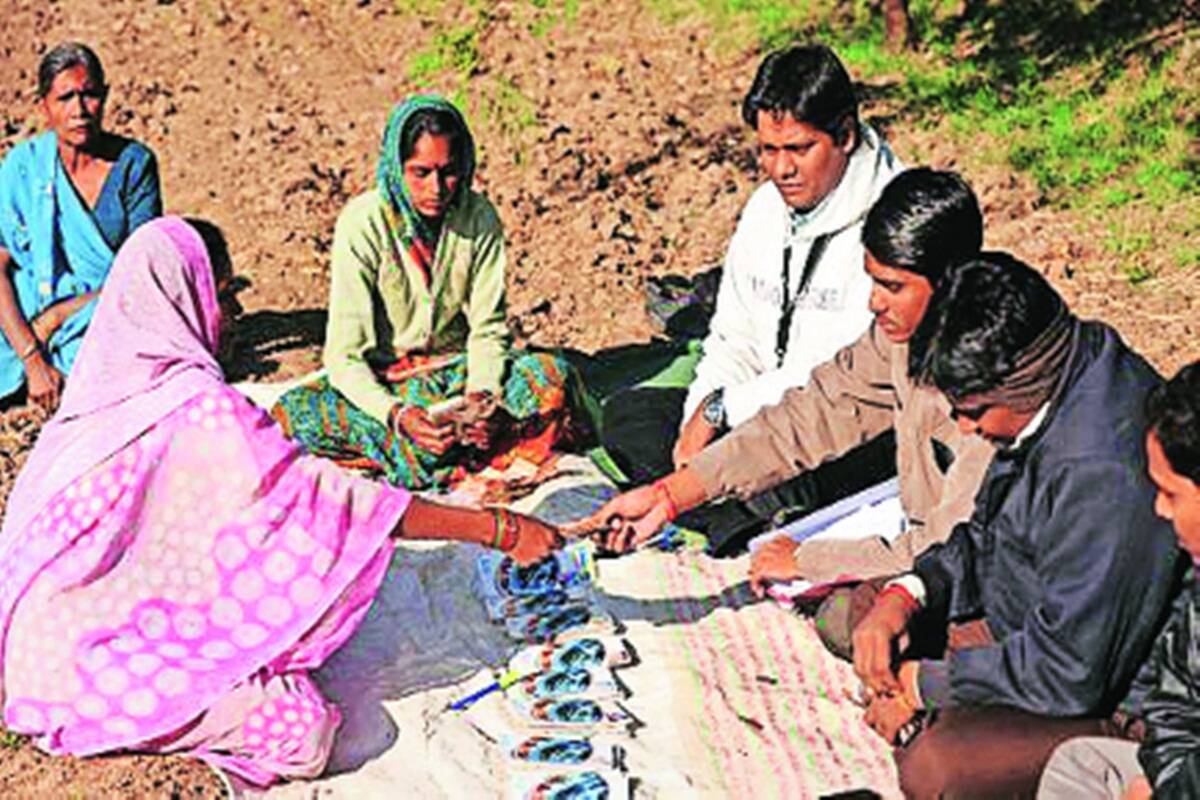
As India prepares for the third phase of the world’s largest vaccination drive making it available for everyone above 18 years, PayNearby, India’s leading branchless banking and digital payments network, has rolled out plans to leverage its wide distribution network to assist citizens in enrolling for the vaccination program. 15Lakh+ PayNearby retail touch points across 17,500+ PIN codes will be leveraged to create community awareness around the program and assist citizens to overcome tech and language barriers, and seamlessly register themselves on the CoWIN app. This step is in sync with the government’s efforts to immunize the country at an accelerated pace.

The second wave of COVID-19 has gripped the country and in order to overcome this pandemic, everyone needs to get vaccinated at the earliest. The government has strictly prohibited walk-ins at the vaccination centres and has made it mandatory for all in the 18-44 age group to register themselves on the CoWIN portal or the Aarogya Setu app from May 1st, 2021 onwards. However, most of the population, especially across semi-urban and rural India are not tech-savvy enough to register themselves successfully on smartphones or website. Additionally, they are also inhibited by language barriers which can hinder the registration process.

To combat this challenge, PayNearby has introduced a CoWIN registration module within its trade app, that will enable PayNearby Digital Pradhans to seamlessly assist local communities to register for the vaccination process. The single click, easy access to CoWIN app from within the PayNearby app at all retail stores in the country will not only help create momentum for the program, but also solve for citizen’s language and tech barriers. The module will include content that drives home the message around the importance of immunization to eradicate coronavirus and will help create large scale community awareness for the program. With this initiative, PayNearby aims to register 10 crore citizens, especially across semi-urban and rural India.

Digital Pradhans, who have tirelessly served the country with essential financial services during the pandemic, will double up to create vaccination awareness in their local communities, and also handhold them through the registration process. The effort will be to steamline the entire journey, and through pro-booked appointment slots also reduce chaos and crowding at the vaccination centres.
Speaking on the development, Anand Kumar Bajaj, Founder, MD & CEO, PayNearby said, “As India fights the worst-ever pandemic wave, PayNearby is committed to doing our humble bit to ensure every citizen in the country is vaccinated at the earliest. Flattening the COVID-19 curve eventually rests on judicious vaccination deployment and we are dedicated to accelerating this process through our Digital Pradhan network.

The kirana stores have always been a crucial part of the Indian economy as well as an important hub for community exchanges. They enjoy a very high level of trust and familiarity in their local areas. This local trust will be channelized to create social awareness around the importance of immunization and also assist citizens limited by tech ability and language barriers to seamlessly register for the vaccination program.

Assisted registrations and pre-scheduling of appointments at retail stores will prevent flocking at immunization centres and help people observe adequate social distancing norms which is critical at this juncture to put a check on the virus spreading any further. Our Digital Pradhans have shown great resilience and spirit of selfless service throughout the pandemic and provided uninterrupted service to ensure citizens had access to essential financial resources to fight the deadly virus. I feel humbled that together we can again contribute to ensuring seamless implementation of the immunization drive and create a safer future for everyone.”


About PayNearby:
Incepted in April 2016, PayNearby is a fintech company creating technology and distribution network to reach financial/non-financial services to India and Bharat both. PayNearby empowers retail shop owners to offer digital services to local communities, thereby boosting digital financial inclusion. Retailer services are focused on Agent Banking, Digital payments, microSavings, microInsurance, Loan enablement among others.

It was founded by Anand Kumar Bajaj, Subhash Kumar, Yashwant Lodha & Rajesh Jha who bring with them rich experience in the field of banking, payments and other financial sectors. PayNearby is a DIPP-certified FinTech startup, partnering with various financial institutions including YES Bank, RBL Bank, IndusInd Bank, SBM Bank India, Equitas SFB, Ujjivan SFB, Axis Bank, ICICI Bank, State Bank of India, CC Avenue, Bill Desk, NPCI, FASTag, NBFC and FMCG companies. It is the sole technology provider using Aadhaar Enabled Payment Services (AEPS) and IMPS to YES Bank, making them one of the only two fintech companies hosted by the National Payments Corporation of India (NPCI).

For more details, contact:
Siva Subramanian
E: siva.subramanian@paynearby.in

PayNearby + Zendesk: Building resilience by strengthening relationships

PayNearby, India’s largest branchless banking network, brings financial inclusion to the masses. Learn how the fintech startup re-invented its support operation, streamlined its WhatsApp usage, and achieved record-level business performance—all during a pandemic.

“Zendesk has support videos that are very good, and whenever we’ve asked for chat support, we’ve received it quickly. That’s not something I can say for many other SaaS companies, frankly.” Yashwant Lodha, Co-founder PayNearby

“Support at Zendesk itself is so wonderfully managed that if I want support regarding any feature in your product, there is a team for that. And there is specialized support during implementation, which helped us to accelerate adding Zendesk to our organization.” Minakshi Taly, Project Manager at PayNearby

       +30%                                                                                      12,000                                                                                                      70%

Efficiency boost                                                                     Tickets per month                                                                                   One-touch tickets

An estimated 120 million Indian citizens migrate from their rural homes to urban areas for jobs—most of them for hourly wages in the services and construction industries that offer the equivalent of about $300 per month. On paydays, they stand in bank lines for hours to remit some of that pay to their families. That waiting time represents hours of lost income.

These are some of the people PayNearby set out to help with its digital financial network.

Broadening access by partnering with trusted community members

“We started off PayNearby in 2016, with the broad idea of bringing financial inclusion to the masses,” said Yashwant Lodha, who co-founded the parent company Nearby Technologies with Rajesh Jha and two other financial services veterans. “Everybody’s been reading about the fintech revolution that’s happening in India and around the world, but most of the solutions, at least in India, are targeted at the top 15 percent of the country. India has a very large population that is neither digitally literate nor has digital money to become equal participants in the fintech revolution.”

Within five years, PayNearby was India’s largest hyperlocal fintech network, active in more than 17,500+ postal code areas across the country and logging 1 million daily transactions. Its customers now include local kiranas (mom and pop retailers), microfinancing and credit agencies, food ordering and delivery services, and businesses in rural areas that are unable to get to the bank during regular hours.

It is the kirana owners—trusted members of their communities—who register their businesses with PayNearby to act as ATMs for their neighbors. “Basically we contracted with small retailers all across these industrial clusters and gave them an app through which they could do money transfer,” Lodha said. “Let’s say I’m a factory worker in one of the corners of Mumbai, Siva runs a retail shop, and my sister Minakshi is in my village, 2,000 kilometers away. I come to Siva’s shop, I give Siva $100, I give him a bank account number, and the transfer happens in about 7 seconds.” The retailers benefit by gaining a small commission for every transaction—as well as additional traffic in their stores.

“The idea is to bring banking out from a trusted four walls into another four walls, which is far nearer to you, but just as trusted as source,” Lodha said. All in all, PayNearby provides about 20 services to its retail stores including cash deposits, withdrawals, bus tickets, rail tickets, mobile recharges, and electricity bill payments. More recently, the company added savings and insurance to its service offerings, “and we are on our way to solve work lending,” Lodha says.

Providing essential financial services, at scale
PayNearby built its success with a dual support model, serving retailers on one hand and its field staff on the other. In all, support comprised six separate teams, each dedicated to a particular mission: retail calls, sales calls, technical issues, finance, onboarding, and enterprise partners. Historically, PayNearby’s support channels primarily were phone and email, with no centralized ticket system.

For the field teams, who serve in a hybrid sales operation role that includes ensuring support for the retailers and suppliers they bring into the PayNearby ecosystem, the channel of choice was WhatsApp. But the teams used several WhatsApp groups, which caused some tickets to be lost and some to be unwittingly picked up by more than one agent at a time. Accountability was nearly impossible. In its hurry to cover all of India with its services, support was the area that suffered most. “It was a nightmare,” Lodha said.

And then the COVID-19 pandemic hit the country. The Indian government imposed a sudden lockdown, shutting down businesses and transportation systems and mandating its more than 1.3 billion citizens to quarantine at home. Migrant workers lost their sources of income and were unable to travel home to their villages. Within four to five days PayNearby’s money-transfer business fell from $200 million to $15 million per month and its rural cash withdrawal business was halved. No one was buying value-added services such as insurance.

But PayNearby was declared an essential service and allowed to operate, and when the government announced a COVID relief scheme that included financial subsidies for a significant part of the population, “our cash withdrawal business went from $400 million pre-COVID to about $500 million for the first three months when the government was doling out extra subsidies,” Lodha said.

Still, in a time when “our only objective was to conserve cash and cut costs,” said Lodha, “the pandemic also taught us that eventually relationships are what’s going to matter. ” If PayNearby could figure out how to onboard customers via a digital rather than face-to-face process, so could its competitors. It was time to reimagine PayNearby’s customer support operation.

WhatsApp + Zendesk: Supporting field workers with their tool of choice

With the goal to get all of its support teams onto the same platform—and one that supported the field team’s firm attachment to WhatsApp, Lodha began evaluating options.

“I didn’t want to get into a smorgasbord of things—where this will solve this problem, this will solve another problem, I need an add-on or another tool, or I need an integration,” Lodha said. “I needed quick benefits.” So after assessing Freshdesk, Zoho, and Zendesk, Lodha selected Zendesk, partially based on its track record of successful installations around the world, in multiple languages. PayNearby completed 30 percent of its implementation during the proof-of-concept process, which confirmed that Zendesk could be quickly implemented.

In addition to solving accountability challenges, the company needed one place that could take care of all emails, phone calls, and WhatsApp communications the internal teams were dealing with—especially given the company’s 50 percent staff turnover during the pandemic.

“Field staff is a very high-churn business,” said Lodha. “Some of the new people in their onboarding feedback after 30 days said that getting support was like navigating a maze at this organization. ‘If you have an operations problem go to Faith, if you have a finance problem go to Minakshi, if you have an onboarding problem go to Siva’—I realized that if I could solve my internal team queries, I’d have 70 percent of my challenge solved.”

Zendesk’s WhatsApp integration feature also made it possible for Lodha to centralize WhatsApp communications. With the ticketing system in Zendesk, “emails come there, phone messages can get attached there, and WhatsApp can also get attached there. All tickets can come to one desk managed by Yashwant, Siva, and Minakshi,” Lodha said. “There is accountability, there is transparency. People can see which tickets have not been resolved over preset time periods. Things don’t fall through the cracks.”

Using data to improve workflows, lower ticket volumes, and become resilient

Lodha said Minakshi Taly, a PayNearby project manager, has created several triggers, automations, macros, views, and reports. In the tech support team alone, there’s been a 25 percent to 30 percent reduction in time spent simply by routing tickets to the right people.

In addition, the company has begun to get quality data—something it did not have before Zendesk. By analyzing tickets related to the company’s cash collection offering, for example, Lodha’s team realized it had only two problems overall. It took the team a couple of weeks to figure out a solution to one of those problems—cash collection tickets—and just a few days to implement it, according to Lodha. The result was an 80 percent reduction in tickets for that product line.

Those are just some of the benefits garnered during its first few months of the Zendesk implementation. “As a business, I am very proud of the fact that we have been resilient,” said Lodha. “We are just a small five-year-old organization. We survived the pandemic. We did our highest numbers in December 2020, and we surpassed those numbers in January. We went from strength to strength, we have better technology, and we have better support.”

‘Women’s Digital Independence Index’ – AadhaarPay and Cash are the most preferred modes of payment for women customers

PayNearby releases ‘Women’s Digital Independence Index’ – a detailed analysis on ‘financial consumption by women at retail outlets’

 More than 65% of women still preferred dealing in cash, followed by AadhaarPay, UPI QR and cards in that order
 Most digitally adept women customers engaged in financial transactions at retail stores fell in the age group of 31-40
 Cash withdrawal, bill payment and mobile recharges — top three services availed by women customers at PayNearby agent outlets
 Micro savings in the range of Rs. 500-750 each month is the trend
 Rs. 1000-2500 was the most common range of withdrawal
 For saving goals — child education is the top priority followed by gold investment

Mumbai, March 08, 2021: PayNearby, the country’s largest branchless banking network, today said that cash continues to dominate the payments space among women as more than 65% of female customers considered it as their most preferred mode of payment, followed by AadhaarPay. The insight was shared as part of a detailed analysis titled — ‘Women’s digital independence index’ – a Pan-India report showcasing financial consumption by women at retail outlets’ released by PayNearby today.

The report has been prepared basis a Pan-India survey conducted by the company among 3,500+ retail stores in the country, recording financial transaction of women consumers as observed in the retail outlet.

According to the report, more than 75% of the retailers surveyed mentioned that women within the age group of 31-40 years were the most digitally adept, with more than 58% of financial consumption by women at their stores happening from that cohort. This was immediately followed by the age group 20-30 years. Especially, in urban and metro centres, which were remittance driven, 20-30 year olds contributed to nearly 25% of women consumers for financial services.

While cash still remained the most preferred mode, Aadhaar Pay, UPI and Debit Cards also saw adoption among women consumers, with preferences ranging from 5-15% among different age groups. Cash withdrawal, mobile recharges and bill payments were the top three services availed by women customers at retail touch points. At urban and metro centers, money remittance also saw good adoption. The transactions were primarily conducted by young working women belonging to the age bracket of 31-40 years (45%) and 20-30 years (25%).

In the withdrawal market largely driven by Tier III and rural regions, majority of the transactions conducted by women were in the age bracket of 31-40 years (65%). Approximately 78% of women in Tier III and rural markets availed cash withdrawals. Overall, Rs. 1000-2500 was the most preferred range of withdrawal for women across the country.

The report further stated that while more than 76% of women operated their bank account themselves, they were primarily for the purpose of cash withdrawal and cash deposits. However, the penetration of more evolved services such as insurance (less than 5%) and Bachat Khata (less than 12%) were comparatively meagre. Interestingly more than 20% of the women admitted to their husbands operating their bank accounts instead of themselves.

Commenting on the report findings, Anand Kumar Bajaj, Founder, MD & CEO, PayNearby, said, “Our country is going through a digital revolution. It is heartening to see young women in the age-group of 20-40 years engaged in micro digital transaction of financial services across retail stores in the country. From assisted to self-service mode, the journey requires persistence in the eco-system. It is great to see our women driving the digital momentum, starting with AadhaarPay and UPI QR and help bring this change. As the youth start digital financial transactions, it will simplify their lives and help build a solid foundation for the evolution.”

“The study showed that post COVID, the awareness among women customers to save for the rainy day have substantially gone up, with more than 32% of women customer indicating this as a priority for them. However, informal savings at home still seems to be the trend, with less than 12% of women customer showing awareness for a formal savings product. To bring change and inculcate the habit of formal savings in every household, we require coordinated efforts from all stakeholders, and at PayNearby our commitment towards that continues unabated.”

He further added, “Acquainting women to digital modes of payment will help drive up overall account ownership. Digital assistance for use-cases such as paying expenses or accessing digital commerce and infotainment can save women time and resources and help improve quality of life. It is our mission to enable form factor agnostic simple to use digital payment alternatives at all kirana stores in the country, so that our masses, especially our women can soon bridge the digital divide that exists in the country.”

“Financial inclusion is what will facilitate women, give greater control over their earnings and savings. At PayNearby, we have always been focused on driving financial inclusion for women, whether through our Digital Nari program or creating easy-to-operate goal based saving solutions for them. We believe economic empowerment will also help drive gender equality.”

The report indicated that almost 32% of women visiting kiranas and retail outlets for financial transactions used smartphones and also availed WhatsApp actively. Adoption in cities were as high as 50-60%. Rural Bharat also saw a good adoption, with double digit adoption almost everywhere in the country. This signifies a growing adoption of digital services among women consumers visiting Kirana stores for financial transactions.

When asked about their top three saving goals with regard to future investments, child education topped the list for women, which was followed by ‘investment in property’, ‘purchase of gold’ and ‘purchase of electronic goods’. The report also observed that post the covid-19 pandemic, savings for emergencies was being viewed as a priority by women. 51% women indicated
Rs. 500-750 as their preferred range for monthly savings.

With just 5% of women customers aware of insurance as a service, the report highlighted the impending need to create more awareness for the same, especially across rural and semi-urban markets. However, among the cognizant respondents, life insurance followed by health were the preferred choices.

© 2021 PayNearby. All rights reserved.

About PayNearby:

Incepted in April 2016, PayNearby is a fintech company creating technology and distribution network to reach financial/non-financial services to India and Bharat both. PayNearby empowers retail shop owners to offer digital services to local communities, thereby boosting digital financial inclusion. Retailer services are focused on Agent Banking, Digital payments, microSavings, microInsurance, Loan enablement among others.

It was founded by Anand Kumar Bajaj, Subhash Kumar, Yashwant Lodha & Rajesh Jha who bring with them rich experience in the field of banking, payments and other financial sectors. PayNearby is a DIPP-certified FinTech startup, partnering with various financial institutions including YES Bank, RBL Bank, IndusInd Bank, SBM Bank India, Equitas SFB, Ujjivan SFB, Axis Bank, ICICI Bank, State Bank of India, CC Avenue, Bill Desk, NPCI, FASTag, NBFC and FMCG companies. It is the sole technology provider using Aadhaar Enabled Payment Services (AEPS) and IMPS to YES Bank, making them one of the only two fintech companies hosted by the National Payments Corporation of India (NPCI).

For more details, contact:
Siva Subramanian
E: siva.subramanian@paynearby.in

Abhaya Prasad Hota and Mohan Tanksale join PayNearby’s Board as Independent Directors

 Abhaya Prasad Hota is the former MD & CEO, National Payments Corporation of India (NPCI) and former in-charge of DPSS in Reserve Bank of India
 Mohan Tanksale is the ex-CEO of Indian Banks’ Association and ex-CMD of Central Bank of India

Mumbai, 12th April, 2021: PayNearby, India’s largest branchless banking network has announced the appointment of Mr. Abhaya Prasad Hota, former MD & CEO, National Payments Corporation of India (NPCI) and former in-charge of DPSS in Reserve Bank of India and Mr. Mohan Tanksale, ex-CEO of Indian Banks’ Association and ex-CMD of Central Bank of India to the company’s Board of Directors. The new appointments are in line with PayNearby’s vision to create a strong governance at its core while accelerating to the next phase of growth. Mr. Hota and Mr. Tanksale will serve as Independent Directors to further strengthen PayNearby’s vision to deepen financial inclusion and democratize digital payments in the country.

The new board appointments bring with them a rich mine of thought leadership in the field of digital payments, financial inclusion and banking and have been instrumental in revolutionizing digital payments and digital banking in the country. Their experience and demonstrated expertise will help create a unique culture within the organization and empower teams to innovate with passion and purpose every day, as it works towards making a digitally strong and financially empowered India.

Speaking on the occasion, Anand Kumar Bajaj, Founder, MD & CEO, PayNearby said, “It’s a momentous occasion for PayNearby to welcome Mr. A. P. Hota and Mr. Mohan Tanksale on our board. Their guidance in the form of independent directors will help us establish stronger governance as we move to the next phase of growth and scale. Their decades of work and commitment to the cause of financial inclusion and democratizing digital payments will lend valuable guidance in our journey. The ‘Digital India’ agenda of bringing high-end technology to the bottom of the pyramid has been exemplified and powered by these two stalwarts. We are certain that they will guide us on an orbit-shifting path towards bringing financial liberation for the country at a much accelerated pace than before. We are privileged to be able to call on the experience of Mr. Hota and Mr. Tanksale.”

Commenting on the appointment, Mr. A. P. Hota said, “I am delighted to be a part of the PayNearby family, which has been pioneering financial inclusion through their expansive retail network and stable technology architecture. I hope to help catalyse their growth and forward-looking vision in a strategic manner while working with like-minded people and focusing on driving last-mile connectivity for digital payments.”

Mr. Mohan Tanksale said, “It is an exciting time in PayNearby’s journey. The company is well positioned to move to the next stage of expansion, where it is able to financially empower the lives of every unserved Indian. I feel privileged to join the PayNearby team as an independent board director. PayNearby has dedicated itself to bringing affordable financial services to the bottom of the pyramid and I hope to do my best to guide them and take PayNearby to greater heights while fast-tracking inclusive growth.”

Eyeing against adversity

When COVID hit, nobody was prepared for such a crisis as it took us to uncharted and unimagined territories. But, 2020 has also been a year of transformative learning for most of us in some form or the other. It has forced us to rethink and redefine our priorities while making the most of the situation. And, it has forever altered how organizations operate, ushering in a new normal from which there is no going back.

The pandemic served as an impetus for industry bodies, companies, and regulators to re-evaluate their current structure while creating an opportunity out of adversity and organizations have risen to the challenge to fight the impact of COVID.

‘Zidd aage badhne ki’

At PayNearby too, we implemented this mantra to go from strength to strength in the face of a crisis, in resonance with our brand campaign – “Zidd aage badhne ki.” When the crisis struck, our aim was to support our retailers and customers in a meaningful, human, and relevant way. And, in a business model like ours, which caters to the underbanked and underinsured strata, it was critical.

The pandemic served as an impetus for industry bodies, companies, and regulators to re-evaluate their current structure while creating an opportunity out of adversity and organizations have risen to the challenge to fight the impact of COVID: Anand Kumar Bajaj
When the lockdown was announced, our tireless team and selfless ‘Digital Pradhans’ served as frontline corona warriors to ensure that people in the hinterlands and remotest parts of the country could withdraw cash and receive remittances in times of dire peril. In the peak lockdown months of April-June, we were fortunate enough to disburse over 9000 crores in direct benefit transfer as indicated by government relief funds through our retail touchpoints, and 30,000 crores in total all through the lockdown.

‘Retail is evolving, retailers are not’
Large-scale disruptive events such as the pandemic reiterated the need for businesses to develop resilience. This is not just in the form of minor shifts to organizational routines, but developing new competencies to avoid shocks and not just reducing their impact. At PayNearby, we used this situation to venture into new verticals besides upscaling previous ones as well.

BuyNearby was built around the belief that ’retail is evolving, but retailers are not’. To stay relevant amidst today’s dizzying technological advancements and e-commerce giants, the humble Kirana store needs to be empowered to compete. Through this online hyperlocal delivery service, we are helping the mom-and-pop stores digitize themselves and mark a presence in the online world.

Large-scale disruptive events such as the pandemic reiterated the need for businesses to develop resilience. This is not just in the form of minor shifts to organizational routines, but developing new competencies to avoid shocks and not just reducing their impact

While the lockdown caused widespread job losses all across the globe, the most severely hit were the migrant workers all across the country. We had always wanted to launch a job registry and the lockdown only sped up the process, cementing our intentions. Thus, on May 1st, Labour Day, leveraging our extensive retail network, we launched JobsNearby – our national jobs registry for the out-of-work blue-collared workers.

We are not just building trust, but rather augmenting it. Through our retail partners, we are enabling assisted agent banking to handhold a cash-dependent economy into a new phase of banking. Currently, we are doing a monthly throughput of over ~5500 crores, with 15+ lakh retail stores in 17,500+ PIN codes all across the country.

We are currently leveraging our intertwining technologies to add other services to our bouquet, such as saving, lending, and insurance, along with providing enterprise solutions to e-commerce companies, OTT platforms, NBFCs, and financial institutions to reach the last mile. We want our stores to serve as a catalyst to digitize cash for the mass market consumer and give them easy access to digital consumption.

We are extremely grateful to the challenges thrown our way in 2020 because it has only helped us grow stronger while learning to innovate prudently. The pandemic has allowed us to take a microscopic lens at not only the world but also as entrepreneurs in business. We must remember that how one deals with hurdles and thrive in adversity is what defines an individual.

The systemic digital transformation
Lastly, the pandemic has also imbibed in us a deeper appreciation for technology and how it has supported various crucial needs like spending more time with family. Without a systemic digital transformation, countrywide remote working would not have been possible.

The pandemic has allowed us to take a microscopic lens at not only the world but also as entrepreneurs in business. We must remember that how one deals with hurdles and thrive in adversity is what defines an individual

This digital disruption has also caused organizations to rearrange their priorities when work from home became the norm. Even as we slowly return to normal, this paradigm shift is here to stay.

The COVID-19 pandemic has also allowed businesses to foster their emotional intelligence, thereby, being a source of resilience for society as a whole. Businesses that continue to pursue this path will own their domain as they will know exactly what their customers need, feel and expect.

This, in turn, will help them drive growth through innovative and exceptional experiences they offer their customers based on empathy and real-time understanding of their needs.

Rural consumption: How ‘sachetisation’ by fintechs can get financial services to bottom of rural stratum

Mahatma Gandhi’s concept of Gramodaya, Antodaya, and Sarvodaya captures the true essence of all economic progress and development. These terms can be roughly translated as the upliftment of rural India, of the last mile, and the upliftment of all. Today, this holds particularly true than ever because for India to shine bright, rural India has to progress. It is increasingly getting clear that ‘inclusive growth’ is mandatory for smoothening our country’s journey towards economic progress. India, home to one of the most fragmented banking systems, has been rolling out new-age financial startups to widen reach, thereby pushing the agenda of financial inclusion. However, in a vastly geo-distributed population like ours, financial inclusion has been a huge challenge owing to factors such as – socio-economic influences, inhibition to adopting technology, high distribution and operational costs, and lack of inclusive growth among others.

Most of India’s population lives in villages, it is imperative that there is a robust network in place – both digital and assisted – to allow the beneficiaries to avail them. People living in rural areas are especially in dire need of financial services for a range of products – like the ease of access to savings, credit, education, working capital for entrepreneurship, and protective reasons like health insurance. Several constraints like the high cost of financial infrastructure in these areas, lack of financial literacy, and high transaction costs also discourage people from depositing savings, thereby depriving households of an opportunity to build financial assets. The key is to enable banking to be location agnostic, ensuring that irrespective of wherever people are, they have access to financial facilities.

Fintechs are driving the inclusion wagon with their tech-led solutions. They are rapidly becoming the face of financial inclusion possibilities, especially in an economically diverse and developing country like ours. The fintech industry’s growth story in India – due to its abilities and agility – indicates an enormous financial services market opportunity that has been untapped. The technological innovations aimed at breaking the barriers of the urban-rural divide are able to bring more tech-shy people within the realm of financial inclusion. With an increasing number of startups, maturing ecosystem, and favourable government stance, it is needless to say that fintech is here to stay and grow further. The idea is to nudge the fintech industry towards a path where it should make a difference – beyond an easily accessible market of the tech-savvy urban customer base.

The hurdle of accessibility in underserved regions is largely being addressed by branchless banking – through business correspondents (BCs), POS terminals, and mobile banking. Their usage has only intensified since the pandemic – with more people adopting channels like Aadhaar Enabled Payment System (AePS) or micro ATMs to withdraw cash and access DBT (Direct Benefit Transfer) funds in the peak months of the lockdown when movement was heavily restricted.

To generate appeal among the rural stratum, both governments and providers need to track adoption patterns closely and understand customer needs to bring them into the ambit of financial inclusion. One main barrier to their access to formal banking channels is their irregular income flow which inhibits them from getting bank loans, saving to reap interest benefits, and even buying insurance policies, which usually have high premiums. Sachetisation of services is a way to reach the bottom of the pyramid – by customising financial offerings to be affordable to meet their future goals. It will allow communities lying outside the financial fold to save, borrow and invest securely. It will save them for future contingencies and unscrupulous moneylending channels, which often drive them further into the debt trap.

Financial products catering to the last-mile access must be of small ticket size with short tenure, aiming to meet the specific population’s needs. Sachetisation is not a novel concept – it has earlier transformed the FMCG sector (think shampoo sachets) – helping services transition from luxury to affordability. Through these ‘micro’ sizes, a systemic change can be brought about in their mindsets towards insurance, investments, and even lending. With the help of API and plug-and-play platforms, they can serve a considerable segment of the population through customised low-value, high-volume transactions. Consider the case of telecom; smaller value packs of recharge are in demand than higher value recharges.

Accessibility, usability, user-friendly, interoperability, quick decision-making, and rapid processing are key factors for offering financial services in a sachet. It would also require a change in the approach in the mind-sets of providers from a push-based offering to pull-based. The process will lead to fulfilling specific, context-based needs by altering the core product offerings.

This cohort, though often underbanked and unbanked but highly aspirational, is getting exposure to trends through internet connectivity and smartphones. At a time when big companies have notoriously been struck by a string of defaults, who are usually the recipient of large bank loans, rural regions are emerging as the saviours of the economic flux by driving consumption and it is on the banking ecosystem to ensure that it has a multiplier effect. In the end, it is only through Gramodaya and Antyodaya, we can bring an era of Sarvodaya. And, sachetisation is the way forward!

Fintech startups universalising banking services among masses

Pandemic amplified the need for contactless payments to reduce transmission risk

The fintech industry wants continued focus and sector-friendly policies to be implemented to boost more participation in this sector, especially for the business correspondent (BC) industry, which is truly the poor man’s network and plays a pivotal role in ensuring financial access. “The fintech industry of the country hopes to see continued focus and sector-friendly policies,” Anand Kumar Bajaj, Founder, Managing Director and CEO, PayNearby, tells Bizz Buzz

How has been the journey of fintech companies in India so far?

Fintech companies have come a long way in the country over the past few years. Post demonetisation, there has been a radical rise in the number of fintech startups in the country, especially in the payments sector. With the success of AePS, UPI and P2P payments, there has been a rise in digital banking and app-based services. Collaborations between incumbents and technology disruptors have completely changed how financial services are delivered and integrated into everyday experiences. Examples of numerous use cases enabled by these rapid advancements include paymenttech, insuretech, robo advisory, data visualisation, lendtech for thin file customers and financial discovery platforms.

Rapid advancements in financial technology, together with rising collaboration between banks and new-age startups have the potential to bridge the digital and financial divide that exists in the country and create a stronger India. By democratising and satchetising products into consumable experience, fintech startups are universalising banking services among the masses and creating long-term sustainable financial models. It is now seen as a sector that is making the impossible possible.

The pandemic has made 2020 an unprecedented year and has boosted prospects for the fintech players in every aspect of life. How do you see it in terms of business facilitation? What is the way forward, present challenges and demands from the government and the RBI?

Covid-19 may have severely impacted businesses worldwide. With restricted mobility, there has been a major thrust towards digitisation globally. The pandemic has amplified the need for contactless payments to reduce the risk of transmission. This has given a major boost to digital payment adoption in the country and is also helping in promoting new form factors and experiences in this sector. With wide-scale restructuring in most sectors, and businesses and consumers going online, the only way forward for digital payment industry from here is northwards. As it propels towards growth, what needs to be kept in mind is that we put the right firewalls and security measures in place that protects the interest of consumers.

With ATMs becoming unviable to run in many parts of the country, especially in rural regions where even otherwise there was limited penetration, there is an urgent need for cost-effective digital architecture to provide accessibility to financial services. Branchless banking has seen a significant rise since the lockdown. One cannot ignore the role of Aadhaar banking in disbursal of DBT (direct benefit transfer) funds to masses during the pandemic, led massively by the tireless effort put in by the agent banking network.

The existing geographical challenges which have aggravated further in the wake of the pandemic has impeded accessibility to financial services in many areas, and this is where agent banking or business correspondents stepped in. They played a pivotal role in ensuring that the last mile had access to resources to tide this pandemic. In a country where there are less than 18 ATMs per lakh people, there is an immediate need to multiply business correspondents’ network multifold. So, it is imperative that we have enough support system for the BC industry so that they are viable and have the motivation and resources to execute their critical role in these difficult times.

On the technology side, there is a need for robust mechanisms that use tools like data science, artificial intelligence, blockchain and machine learning to fortify transaction security that can pave the way for true digital transformation. Additionally, regulatory bodies are now focusing on methods to bring rural India into the digital fold through innovative form factors.

As India moves towards a rapid digital growth, PayNearby is committed to simplifying high-end technology for the bottom of the pyramid, so that benefits of digital payments and digital banking can reach the masses. We are focused on creating form factor-agnostic digital payment solutions, available at over 10 lakh nearby outlets, so that there is a solution for every customer need. We want to ensure essential banking services are available for every citizen in the country at a store nearby, and the gap between Bharat and India can be bridged once and for all.

RBI has proposed a full-fledged separate division for the fintech players. How do you see it? What kind of dialogue are you having with the regulator and bankers amidst the evolving economic scenario and needs of the present time?

The fintech ecosystem in India has been fortunate enough to have progressive regulators with a strong, undeterred vision to usher in widespread financial inclusion. Over the last few years, RBI has created policies to boost new forms of lending and payment institutions such as mobile wallets, P2P lending and payment banks. It has also been making regulatory changes to encourage digitisation of banking, credit and payment services. Various initiatives such as the Innovation Hub, Regulatory Sandbox, OCEN (Open Credit-Enabled Network) and AA (Account Aggregator) are sure to boost innovation and test the viability of new technologies. Regulatory bodies like NPCI have made India the poster boy of digital payments through the unprecedented success of UPI and its monumental growth has caught the eye of major companies globally, putting India on the map as a digital innovator, rather than just an implementor.

We hope to see continued focus and sector-friendly policies implemented to boost more participation in this sector, especially for the business correspondent industry, which is truly the poor man’s network and plays a pivotal role in ensuring financial access. Friendly taxation policies and booster packages will go a long way in driving more participation in agent banking programs across the country.

How fast is the industry adapting and catering to the growing need of go-digital, a move highly promoted by RBI and the government?

Since the pandemic, we have seen digital payment platforms breaking records with UPI crossing 2 billion transactions a month, almost a 2x growth since last year, with a 135 per cent increase in overall the digital payment usage, especially in rural areas. AePS has also been critical in facilitating access to government relief funds and DBT access and has seen exponential growth during this period. MSMEs, too, have adapted to going digital, with PayNearby being instrumental in bringing kirana stores and local retailers online and helping them be a part of the e-commerce wave. Digitisation has mostly taken off successfully in urban areas, riding on the massive success of UPI and payment apps, but a lack of awareness and digital infrastructure still inhibit the rural sector. A concerted effort to handhold them to adopt digital transactions through agent banking and assisted tools is the key to catalysing this process and bridging the digital divide.

Winning against adversity

None of our resumes included experiences to deal with a situation like COVID. To call it a unique period, at least in our lifetimes, will be an understatement. So, as we fought our way through the pandemic, our success or failure depended solely on how well we adapted to the rapidly evolving situation. There wasn’t any play book to refer to. To overcome adversity, the earliest realization was the need to acknowledge adversity and accept that in the short to medium term, none of our lives, including those we serve, remained the same.

Successful organizations are defined by the level of empathy that they have with their audience and how well businesses understood the emotions, the everyday lives, the highs and lows of their user group. COVID brought a tectonic shift in everything. As people battled through bereavement, anxiety, job losses and unfathomable challenges of operating in a no-contact environment, businesses needed to quickly realign expectations and figure out what was relevant in today’s context.

COVID has accelerated digitization in all aspects of our lives, and the future is to ensure form factor agnostic digital payments, easily available at neighbourhood stores so that the digital divide between Bharat and India can be bridged once and for all: Jayatri Dasgupta

Organizational orientation in the world of crisis had to quickly shift from bottom lines to servicing, of ensuring every department came together to reimagine their services in the current context. Initiatives had to err on the side of humanity, often with no immediate returns, but with the ability to alleviate customer pain and create an emotional bond with the target audience. Audiences would always remember the brands that have provided for them during this time.

At PayNearby, this meant that we had to recenter ourselves and clearly define areas where we could lend support to our partners and customers. As migrants battled through mass exodus and people lost their source of income, our priority became to ensure government relief funds reached the hands of the beneficiary.

With large parts of Bharat having very limited access to formal financial systems, the only way to ensure last mile access of funds was through the agent banking network. We engaged in passionate advocacy efforts to ensure our last mile stores were allowed to operate seamlessly during COVID.

A lot of attention was directed to train our retail partners, our Corona warriors, on the best practices and how to keep themselves protected while serving the masses. Crisis brought out the best in the courageous, and there were thousands of stories from the field, of valour, of selfless service which became our guiding light during these extremely difficult times. These stories had to be recognized and socialized so that each of us could draw inspiration from them and the network operated at optimal efficiency.

From a marketing and communication perspective, this became our topmost responsibility. It was our duty to ensure network motivation and efficacy, so that every citizen of the country had the financial tools to help them tide through the pandemic. Just before lockdown, we had launched our brand campaign, “Zidd Aage Badhne Ki.” In the days of chaos that followed the announcement of lockdown, we repositioned our tonality to “Zidd Seva karne ki” and “Zidd Surakshit aage badhne ki”

And from there arose multiple initiatives, like enabling cash at doorstep, setting sanitized ATM facilities at societies, launching our national jobs registry for out-of-work blue collared workers, and ensuring neighbourhood stores across the country could service their customers digitally through the BuyNearby platform.

Crisis requires us to respond to change in real-time, to ensure that we are not tone deaf, to have a realistic evaluation of both the demand and supply side, and operate from a position of service and not opportunistic profit: Jayatri Dasgupta

The importance of the network and its role in creating income opportunities and accessible solutions for both the retailer and the local community soon became very popular and we onboarded more than 30,000 new retailers at the height of the pandemic.

Today PayNearby has more than 15,00,000 registered retailers, across 17,000+ PIN Codes servicing more than 15 crore customers monthly. COVID has accelerated digitization in all aspects of our lives, and the future is to ensure form factor agnostic digital payments, easily available at neighbourhood stores, so that the digital divide between Bharat and India can be bridged once and for all. Along with focusing on core banking solutions, like inculcating habits of savings and insurance among our masses, this will be a key focus area for the organization.

Crisis requires us to respond to change in real time, to ensure that we are not tone deaf, to have a realistic evaluation of both the demand and supply side and operate from a position of service and not opportunistic profit. Brands that manage to touch the core of their users during these difficult times are brands that will stay connected forever.

Jayatri Dasgupta, Chief Marketing Officer at PayNearby, has more than 19 years of experience in marketing, brand management, product development on web and mobile, digital initiatives, and P&L management in the eCommerce sector. She earned invaluable insights from her many years of work experience at Google and travel marketing companies like Goomo, Cox & Kings, and Cleartrip.

Her leadership has been recognized by several distinguished organisations, and she has been the recipient of several industry awards – including CMO Asia’s 100 most Influential National Leaders in Marketing in 2015 and ABP NEWS Women Super Achiever for Brand Excellence in November 2014.

Unlocking India’s digital potential through COVID-19 opportunity

Today, almost a year after battling with COVID-19 and its fallout, it is not over yet. India has embarked on the world’s biggest immunization drives while the Finance Ministry is busy finalizing perhaps the most crucial budget to inoculate the dwindling economy. Eyeing fiscal revival following the pandemic-induced lockdown and slowdown, Budget 2021-22 will prove to be a make-or-break deal for the Indian economy.
Every crisis is an opportunity to innovate. India has been on a digital-first trajectory for a few years, spurred by its goal of becoming a trillion-dollar digital economy by 2025 and COVID-19 further pushed tech adoption across industries. Globally, digital adoption has catapulted five years in merely two months. In India, retail, healthcare, and digital payments are witnessing a massive change in consumption patterns. However, our country still lags substantially in terms of wide-scale, mass adoption of a digital-first approach.
Therefore, there is a need for concerted effort to create an ecosystem that brings financial instruments to the bottom of the pyramid, in an agile, cost-effective manner.
Over the past decade, even though the Indian banking sector has witnessed a sustained push in the form of several initiatives and reforms from the government and the RBI, a significant gap remains. There is still a dearth of banking infrastructure in rural and semi-urban centres. With just 4 million active POS machines and 12 bank branches and 13 ATMs per 1,000 adults, India is significantly behind other developing economies in terms of physical banking infrastructure.
Currently, POS terminals are a substantial alternative to ATMs owing to their viability both financially and operationally. Unfortunately, there is still a gaping dearth, considering there are only 4 million active POS machines in the country. Offering incentives by means of a tax subsidy will encourage merchants to adopt agnostic devices more proactively while building a more robust digital infrastructure for friction-free digital onboarding, especially across the hinterlands.
Soft PoS which is transforming smartphones into POS machines, has been yet another technology effectively bringing down maintenance and infrastructural costs monumentally. This allows SME merchants to conduct transactions seamlessly, especially in rural areas, where assisted banking is often the need of the hour.
Additionally, a dedicated fund – an acceptance deployment fund to strengthen digital infrastructure across select markets or tax breaks in GST for merchants providing digital payments on-ground, can also be considered in the upcoming Budget to accelerate mass digital adoption.
Interestingly, COVID-19 put the spotlight on the dire need to push branchless banking in the country to promote banking on the go. Banking correspondents have served as the frontline warriors during the pandemic, working tirelessly to ensure people have access to financial services and have served as the point of disbursal for the government’s direct benefit transfer (DBT) initiative.
Regulatory bodies and the government must be urged to ensure the survival and financial viability of these agents, who are often underpaid for the selfless work. Budgetary concessions such as a GST waiver and cash incentives will further augment cashless payments and allow for large-scale implementation of open banking in India.
The global health crisis has had another huge silver lining for digital adoption. COVID-19 and the impact of social distancing have become the ultimate tech disrupter, driving investment and digitising innovations that could outlast the pandemic. The pandemic has led to massive e-commerce growth and greater adoption of contactless payments in the past few months, fuelling a material shift in payments from cash to contactless payments. The Budget should, therefore, encourage and promote technological advancements and innovations. A dedicated fund to strengthen R&D initiatives across the industry or tax incentives to technology start-ups can be yet another welcome move.
RBI recently introduced offline retail payments to facilitate the adoption of cashless transactions in areas with inconsistent internet connectivity. This is a tremendous move to encourage a systemic dependence on mobile-based payments, even in places with an erratic network. Furthermore, with the small ticket transaction limit being increased from Rs 2,000 to Rs 5,000 this month, it can enhance digital usage. This is likely to catapult a burgeoning move towards cashless payments, propelled by the need for minimal physical contact. To further accelerate the impact of this move, the government should consider GST concession to merchants accepting digital payments. This will encourage more and more merchants on the ground to enter the digital fold.
Building the entrepreneurial capability of rural youth through business training, easing the norms to start businesses and creating a fast loan disbursement mechanism for micro-enterprises, especially in rural and semi-urban markets, will help drive the country’s entrepreneurial capital. Besides, the upcoming Budget should also consider allocating funds towards driving awareness campaigns for mass adoption of digital transactions focusing on rural markets.
With COVID-19 here to stay, the upcoming Budget needs to fortify the economy against this crisis and grow stronger and thrive amidst disruptions and uncertainties.

Our Partners

Download PayNearby now

Use PayNearby app & take charge of all your transactions to grow your business