
Our retail partners are our front-line to impact India

PayNearby, the hyperlocal fintech network with over 8 lakh retail touchpoints, selling financial products through the Kirana network and empowering them digitally in the process, has recently partnered with TRRAIN Circle (Trust for Retailers and Retail Associates of India) and RASCI (Retailers Association’s Skill Council of India) to reach out to 20 lakh retailers at the earliest through existing digital channels and help up-skill and certify retailers. In an exclusive interview with Point-of- Purchase, Anand Kumar Bajaj, Founder & CEO, PayNearby, discusses how the company plans to reach the target and bridge the massive digital and financial gap in India.

PayNearby began its operation in the year 2016, right? So how has been the journey so far? How did you manage to reach out to the small scale retailers?

Founded in April 2016, Nearby Technologies is a fintech company offering financial/ non-financial services to the underbanked and unbanked segment. Nearby Technologies works on a B2B2C model through its various brands – PayNearby, InsureNearby, BuyNearby and few more.

It was founded by Anand Kumar Bajaj, Subhash Kumar, Yashwant Lodha & Rajesh Jha who bring with them rich experience in the field of banking, payments and other financial sectors.

(LtoR) Subhash Kumar, Rajesh Jha, Anand Kumar Bajaj, Yashwant Lodha

PayNearby is a DIPP-certified FinTech startup, partnering with various financial institutions including YES Bank, RBL Bank, ICICI Bank, State Bank of India, Axis Bank, CC Avenue, Bill Desk, NPCI, FASTag, NBFC and FMCG companies.

We have been working relentlessly towards our mission of ‘Har Dukaan Digital Pradhan’ since inception to bridge the massive digital and financial gap in India. We empower retailers at the first mile to offer digital services to local communities, thereby boosting financial inclusion in India.

How many small scale retailers are you working with currently?

We have on-boarded about 8 lakh retailers in our last 4 years of existences. We are present in 16,772 pin codes of the 19,000 pin codes. We are able to offer our key services to the common man at the local kiranas without blocking their capitals or occupying their shelf space. Our retail partners are already credible locals in villages/ towns where they serve and our financial and other digital services are bringing additional income to our partners. We want to ‘granularize, sachetise and universalise’ the high end financial technologies through the bottom of the pyramid retailer. Soon at a retail shop, one would be able to ask for 1kg pyaaz, 2 kg aloo and Rs 100 ka insurance.

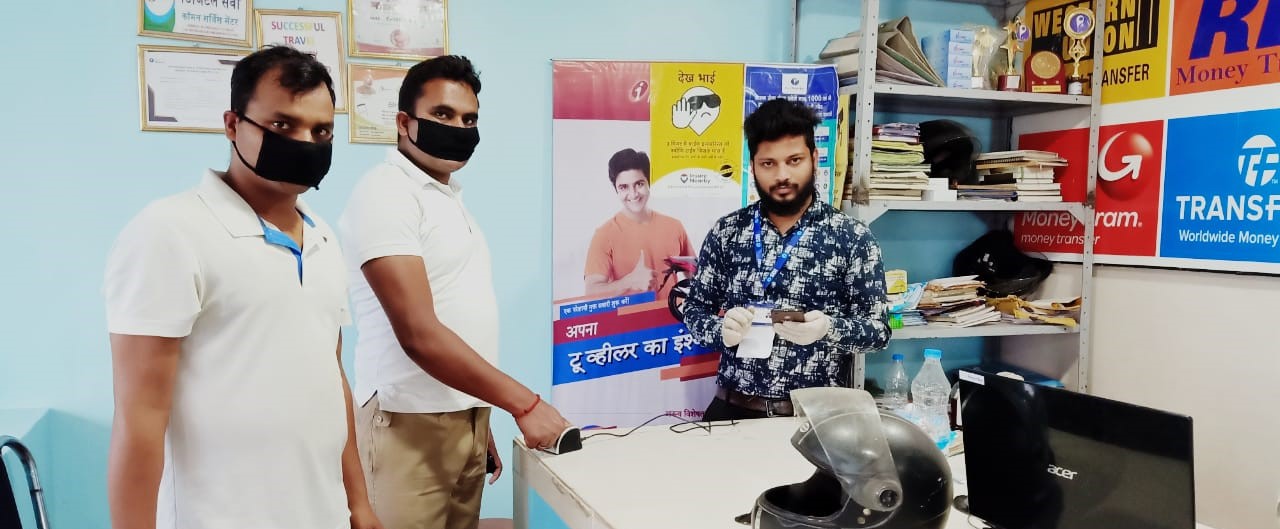
We are looking at our retail partners as a frontline to impact India, not only for reaching out to the masses to provide digitally assisted financial services, but to also skill them and serve the entire country through them. Through our own data collection application, we are able to see and capture the sales windows that they are using today, and we advise them on how they should display their merchandise, put up their signage/ board for better visibility, etc.

Traditional small scale retailers are not that open to technology and neither are they too tech savvy. How do you educate them? And what kind of support/ services do you provide to make them financially and technologically sound?

It’s not about retailers not being tech savvy. It is about improving the user experience and interface and it can be done by training them through videos and then providing the transaction screen. Eight lakh retailers have registered on our platform and are able to smoothly transition into stages of transaction and grow. Whenever a new product/services is launched, we disseminate the training videos on our app on every local language for our partners so that he is able to understand. When we on-board retailers on our platform, we do a KYC verification, PAN validation, account number validation etc to on-board him in a proper manner.

You have recently partnered with TRRAIN and RASCI to digitally up-skill and certify the retailers. What was the main objective of these two partnerships? How are you planning to achieve that target of up-skilling 20 lakh retailers by 2020?

Collaborating with TRRAIN Circle is another milestone in the journey, as it will ensure that retailers at the first mile up-skill themselves and are able to deliver the financial products seamlessly to the customers at the last mile. The partnership will enable e-learning videos along with a slew of skilling and knowledge-building courses, including financial and insurance planning and career guidance to the PayNearby retailers. Additionally, the platform will also promote holistic well-being by hosting in-house counselling for the retailers.

And to further ensure continued up-skilling and recognition of retailers we have also joined hands with the Retailers Association’s Skill Council of India (RASCI) to certify retailers for Individual Sales Professional / Self Employed, Retailer and Distributor Salesman job roles. We wish to reach out to 20 lakh retailers at the earliest through existing digital channels and help up-skill and certify the retailers.

How do you monetize your services that you provide to the small scale retailers?

If you look at migrants who come to urban centre, he or she has 2 choices – wait in the bank for 2-3 hours to send money to his family and thereby waive the Rs 500 interest, or walk up to kirana stores, our partners, and pay Rs 20 to send Rs 2000 home. 62% of our transactions happen beyond banking hours, before 8 am and after 4 pm. That means the consumer is able to appreciate our service and is willing to pay Rs 20 for a Rs 2000 remittance to his family and save his entire day. Likewise when we disseminate Aadhar-based withdrawals to our customer, their banks pay us money because we have served their customers. Likewise when we do a mobile recharge or railway tickets or if we sell an insurance, there is a fee that we generate. This is a small margin, but the segments are willing to pay.
Convenience through convergence will push India’s digital payment solutions industry

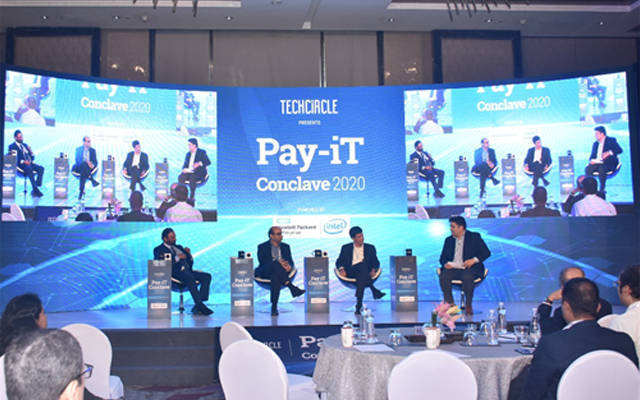
India’s USD 200 billion digital payments industry is preparing for five-fold growth to reach USD 1 trillion by 2023. Over the years, money has taken several forms with the transitions in the digital payments domain. As money becomes increasingly decentralised, banks and fintech companies need to find ways for tapping the market potential with collaborative partnerships. At the recently-concluded 2020 edition of the Pay-iT Conclave by TechCircle and Hewlett Packard Enterprise, banks, FinTech firms, and technology experts came together to discuss the emerging trends, challenges, and opportunities for stakeholders in the digital payments industry.

Future of Payments in India

While speaking of the future of payments, Shalil Gupta, Chief Business Officer, Mosaic Digital shared that as per recent research findings, digital payments will be multi-device and social by 2023. So, to prepare for the future, businesses need to build extensive digital capabilities. After an analysis of the failures and successes of different forms of money, it was concluded that an agile, flexible, and open approach to create digital solutions will foster innovation.

Cybercriminals are also getting smarter with time. India has seen sophisticated cyberattacks in recent times. Therefore, safeguarding the money of the future with upgraded enterprise security becomes essential for the growth of the digital payment solutions ecosystem.

Dr. N. Rajendran, Chief Technology Officer, National Payments Corporation of India (NPCI) shared insights on the digital transformation brought about by innovative solutions such as RuPay and UPI in the banking sector. According to him, “130 million transactions are processed daily on the UPI platform.” NPCI introduced the National Electronic Toll Collection (NETC) FASTag system to streamline NHAI toll payments and reduce the waiting time at toll booths.

The panel discussion moderated by Jaideep Mehta, CEO, Mosaic Digital involved discussions on exploring the relationships between banks and fintechs. Panelists included Anand Kumar Bajaj, Founder-CEO, PayNearby; Aneish Kumar, MD & Country Manager, The Bank of New York Mellon – India and Rajesh Dhar, Senior Director – Hybrid IT, Hewlett Packard Enterprise. Thought leaders of the digital payments industry reiterated the fact that Gen Z prefers mobile solutions. Gen Z is impatient and loves efficiency. Also, 55% Gen Y in India dislike conventional banking systems. With the rise of mobile payment solutions, ATMs will soon start vanishing. Businesses will lose opportunities if they fail to implement new payment tech trends such as OTP verification on time. Also, capabilities are needed for businesses to manage data privacy and to handle AI/ML/Analytics walkthroughs. Besides, the usage of plastic cards can be reduced by converging them into mobile solutions. Instead of using multiple systems, organisations should think about building a single integrated system using APIs for smoother processes.

As far as challenges are concerned, large as well as small players have their share of issues while moving towards the platform economy. Earlier, legal and complicated processes were intimidating FinTech companies who were keen on partnering with banks. Today, the key challenges of the platform economy include customer-centricity, real-time data analytics, and innovations. Anand Kumar Bajaj, Founder-CEO, PayNearby, suggested utilising sandbox set-ups for working with the API environment. Investing heavily in technology may not be feasible for innovative FinTech entrepreneurs. In such cases, entrepreneurs can leverage the asset leasing facilities by HP Enterprise.

A Sensex-like index to measure how advanced India has become in digital payments

The Reserve Bank of India (RBI) on Thursday announced the launch of Digital Payments Index (DPI) to assess the level of digitalisation of payments in the country. “The DPI would be based on multiple parameters and shall reflect accurately the penetration and deepening of various digital payment modes. The DPI will be made available from July 2020 onwards,” the Reserve Bank said in its statement. Both the RBI and government have been aggressively working on enabling the adoption of the cashless payment in the form of digital mobile wallets, debit and credit cards, internet banking and UPI for some time now.

“RBI’s Digital Payment Index is a good move. It will help to map the level of digitization across the country. It will be beneficial for us to understand usage of digital channels in urban and rural areas. Banks and Payment companies will get to know which channels are more popular among consumers. The mapping of digital payments will eventually help the end consumers evolve in the space”, Mandar Agashe, Founder & Vice Chairman, Sarvatra Technologies, said.

In December 2019, Finance Minister Nirmala Sitharaman announced the exemption of Merchant Discount Rate(MDR) charges on the transactions done via UPI and RuPay modes. This was done to take the Indian economy towards a less-cash economy.

We are delighted by the announcement of a ‘Digital Payments Index’ by the RBI. This development is indicative of the power being put by government to aggressively drive the financial inclusion agenda. A body that periodically tracks the penetration of digital payment modes serves as a yardstick, while also suggesting that the RBI is keen on measuring the sector progression, and whether it is aligned to their target goals.  At an individual level, this initiative will enable companies to gauge the ground-level effectiveness of the various programs running across the country. The index will also assist the financial payments ecosystem to identify areas of growth and improvement for widespread permeation of cashless payments”, Anand Kumar Bajaj, MD & CEO, PayNearby, said.

PayNearby augments hyperlocal retailers through digital and financial skills enablement

Retail sector is evolving but the retailers are not! With this overriding concern, PayNearby empowers hyperlocal retailers with digital and financial skills with the objective to improve their services and income. With more than 8,50,000 retailers registered on PayNearby platform to service crores of Indians, it is intriguing to learn how this app transforms the lives of retail business owners, micro entrepreneurs in tier 2 and 3 towns. In this Skill Story, Anand Kumar Bajaj, Founder and CEO, PayNearby, tells about how they are able to create a vibrant ecosystem with “Har Dukaan Digital Pradhan” (making every store a digital hub).

The need for digital enablement and financial inclusion 

With the advent of modern retail and door-step delivery through e-commerce companies, millions of local retailers are facing existential challenges. Many buyers are swinging to online shopping due to discounts and cashbacks. This brings about a sharp reduction in the income level of small retailers. Our objective is to leverage the presence of the retailer to reach out to the customers through a DigiCAL mode (Digital and Physical).

  • Retailers get empowered with digital capability and improve their business through our platform by attracting more customers from their vicinity
  • They are able to render digital financial services to same set of customers, households in the form of open banking

Since we came from banking and finance services background, we focused on products in the payment space that makes the hyperlocal retailing inclusive and helps the retailers increase their income. We were concerned about the small and medium size retailers since the high margin products were moving to online platforms, severely impacting their profitability and chances of staying afloat. It became imperative that we worked for the survival of these retailers, and in turn ensure that both our business grew.

The challenge and the opportunity to skill the retailers

The challenge was to convert a shopkeeper who was used to selling a push based product, now to adopt digital technology to not only grow his own business but also evolve as a financial inclusion evangelist in his local community. It required training the retailers in digital capability, and giving them a simple interface where without much hand-holding, they were able to service their customers. We had to ensure that the learning curve was not too steep and the content had to be modular and simple, so that they didn’t get intimidated.

First, we skilled them to go digital so that they were able to manage their finances and render our services to the mass market. We partnered with TRRAIN and RASCI to impart skill development training to them. We know that training is an ongoing process, and we are committed to doing everything within our means help them evolve as micro entrepreneurs who can navigate the financial and digital landscape of retailing on their own.

Demand and supply mapping, inventory management

By using PayNearby, the retailers are able to understand the pattern of purchasing behavior of consumers. It also helps them in procurement and managing their supplies. For instance, the system knows what he is selling, the supply procured last time, his inventory status and other relevant details. These details enable him to make his buying process easier, where he can place his order directly on the app, the invoice can be received on the app, and the payment to the distributor can also be done from the app. We also share insights on how to manage his visual display in the store so that merchandizing is more effectively visible – so skilling is relevant for these core activities too.

Transparency, monitoring, guidance, mentoring

When we get to see that the business of the retailer is growing well, we have the understanding of their throughput, we find that it is naturally conducive to offer them a loan. The core data has many indicators for augmenting their revenues. Our financial services model helps them in making digital payments. For example, retailers can give out cash to customers, like an ATM. We dispense close to Rs. 3,000 Crore in cash through our retail partners in a simple manner using biometrics. This is an Aadhaar enabled transaction wherein the customers use their thumb impression to get the cash.

This is a win-win for both the retailer and the customer who withdraws the money. The customer gets to withdraw the money securely from a store nearby, and the retailer is saved the hassle of physically depositing the money in the bank. The act of depositing the money in the bank not only comes with additional costs, but also the risks of theft and pilferage. Instead, by dispensing the cash to the customers, he is not only able to digitize the money easily but also earn commission on the same. Alongside, the retailer can use the digital money to procure supplies from the distributors and conduct many other services. We also train our retailers to sell insurance, educate people on medical policy, benefits of saving and investment and how to avail the same.

paynearby_retail_app_training

Training and skill development as an ongoing activity

We see a huge opportunity to empower the retailers with digital and financial literacy.

Our online training programs are simple and the retailers can access them at their convenience. It involves 2.5 hours of learning through videos that are available in six languages, supplemented with another few hours of practical training on how to use the platform. We also conduct face-to-face sessions by showing demo transactions and how they can gradually bring their shop to an online platform and offer additional financial services to the same set of customers.

We’ve set up a digital command center through which we reach out to our retail partners on the basis of data analytics. We also train them on new products and services through our training team. Whenever a new service is launched there is a video on the app so that they can watch it and learn and then attend our local workshops to clarify the details. When we launched our insurance service, about 35,000 retailers got certified as point of sale for insurance, about 13,500 now have registered and sold insurance to their customers.

Financial inclusion and social impact

We are honored to receive the Ministry of Electronics and Information Technology (MEITY) award for innovation in rural inclusion followed by the IFI Award by Access Assist for Rural Financial Inclusion. It is exemplary how the government has helped us with various initiatives such as Startup India, Skill India, Make in India and most importantly, Digital India.

As a fintech startup PayNearby has impacted many retailers at the grassroots level. With more than 8,50,000 retailers using the platform, we have more than 10,00,000 transactions per day. Socially, we have seen encouraging results since the retail community and consumers in 16,722 PIN Codes are able to improve their livelihoods through the app.

While the nearest ATM could be 2 KMs away, our retailers are able to render financial services in the most convenient manner, when most needed! They are able to help consumers during natural calamities like floods, or during medical emergencies. Lakhs of migrant workers visit these retail stores to send money home to their loved ones easily. These retailers also help their customers to deposit their money securely in a bank and help them save for the rainy day or the fulfillment of a dream.  By providing these services, our retail partners have seen a growth in their incomes, with which their aspirations have also grown. Now they are able to send their children to better schools and buy better products for themselves.

7 Skills that Retailers and Retail Employees need to be Proficient at to make them Relevant in the 21st Century

The retail industryaccounts for about 10% of the Indian GDP and is considered to be one of the pillars of the economy. Local kirana stores are deeply entrenched within the Indian culture of community and personalized interactions. They enjoy a reputation for being omnipresent and understanding the pulse of their customers’ needs. The unique relationship these retailers have nurtured, borne out of a sense of familiarity and trust, is the very reason these brick-and-mortar stores are prevalent in a countrythick with competition from e-commerce giants.

The small kirana store in the neighborhood has been as much a very integral part of every Indian as it has been for the Indian economy.With the ‘Digital India’ initiative gaining prominence by the day and the increasing reliance of the younger generation on digital transactions it becomes imperative to empower these kirana stores  so they stay relevant amidst the digital wave. The discrepancy between the growth of retail and the retailers’ ability to match up can be a cause of hindrance to the economic development of the country.

In a race for retail market dominance, multiple players are aiming to leverage the Indian retail framework—however the question remains: are we doing enough to empower these retailers?

There is a dire need to equip local retailers with the skills to perform digital transaction.The aim is to create a formidable combination of technology and last mile connectivity. This hyper-localisation needs to be supported with training and upskilling programs for retailers to ensure that they thrive in the consumption market against the disruption provided by online aggregators.

Few essential skills are:

1. Getting technologically savvy – The unorganized retail market indirectly generates livelihoods for 20 crore people, and thus, it is crucial that this segment espouses digital literacy, facilitating ease of transactions. Customers, especially millennials, are most likely to visit stores offering alternative modes of payments in cases of a cash crunch, and in order to avoid losing out this important segment, these retailers need to provide a bouquet of digital services like POS, Aadhaar Banking and Utility Bills among others, and must be well-versed with the banking interface to serve the customers better.

2.Profound product knowledge –A kiranastore has the potential to be the pulsating nerve centre of the locality it is situated in. The key to their continuous progresstherefore,is in their ability to understand the consumer needs of their catchment area. What sets kirana stores apart from a more streamlined supermarket is the customer trust they enjoy and the affinity they have towards their personal needs. However, it is also important to know the products being sold inside out, which will help themto field questions and create solutions for customers.

3. Selling locally relevant goods – It is essential to sell goods that are pertinent to the vicinity of the local touchpoints to differentiate from online grocery aggregators, and thus become indispensable to their customer. It is critical for these retailers to take inventory, identify and fill the gap for consumers by being the flagbearers of the community’s local flavor. It is also pivotal to use this information to cull out (consumption/consumer/market/local) trends and behavioral trends to predict demand.

4. Communication skills –Approachability is an important quality to have in the service industry, asit is essential to deal with irate consumers politely and with patience. They must be trained to hone their soft skills and improve consumer service.They need to be patient while assisting their consumer base. Making the retailers proficient with communication and marketing skills will go a long way in helping them have a more cordial relationship with their daily customersespecially in semi-urban and rural areas.

5. Time management – A retail employee is required to be mentally and physically active since it can be quite a stressful job. Working efficiently, and prioritizing different tasks like taking stock of products and handling a large amount of billing requires a certain vigilance that needs to be imbibed by the local retailer.

6. Sales and marketing – it is important for a retail vendor to serve as a brand ambassador of any product they sell, and take initiative to ensure a product is promoted rightly – it could be as simple as moving a specific product within a customer’s vision to promote brand visibility. The potential of the vendor must be unearthed beyond menial tasks of stocking and transacting, and must be elevated to take a greater onus in the sales of a store. Through modular training, retail employees must be armed with the persuasion skills to move the customer from curiosity to closing successfully.

7. Ability to scale up business –Kirana shops are unlikely to grow beyond a point and invest in shelf space unless they are enabled with the expertise to draw insights based on consumer interactions – for e.g, if a kirana store is offering money transfer, venturing into a new vertical such as insurance will only be possible if he is armed with the infrastructure and adeptness to gauge demand. This ensures that the retail merchants transform the shop beyond a mom-and-pop store and become a one-stop solution for an assortment of needs.

Should you be held responsible for preventing an e-wallet fraud?

More detection tools needed, but users need to be careful

RBI has taken several measures to control these frauds such as asking e-wallet companies to set up 24×7 customer care helplines to report fraud and offer customer assistance at the hour of need.

A customer-centric approach to ensure prevention of frauds puts a lot of ownership on the issuer. Companies must invest in fraud detection software to mitigate risk, be PCI-DSS compliant and have robust transaction monitoring systems to identify irregularities. Companies should make consumers aware of the risks involved, and educate them against fraudulent measures.

Consumers need to be aware against sharing confidential data, especially through methods like phishing, where sensitive information is stolen through innocuous emails or WhatsApp messages. Consumers should be mindful that bank officials or wallet companies will never ask for confidential details. To be on the safe side, consumers should not park all their funds in one account. Simple steps like setting up SMS and email alerts every time money is deducted from wallets will go a long way.


55% of Bharat wants to save more to manage Covid-19 like situation: PayNearby study

India Savings Behaviour survey conducted with 10,000 participants from low – income groups

  • 65% of respondents reluctant to use formal mechanisms due to irregular cash flows
  • 47% say tenure flexibility and no restriction in saving amount are major factors while choosing a financial offering
  • Lack of accessibility and tech-savviness seen as the main deterrents for the adoption of formal financial channels


PayNearby, India’s largest hyperlocal fintech startup, in its first ‘India Savings Behaviour’ report has revealed that while over 80% of India today has a bank account, yet a huge chunk accounting for more than 70% of the people falling under the low-income group, still avail informal arrangements such as chit funds and cash under mattress to park their savings. Among the key reasons cited for this trend are the strong social contract that chit funds nurture in this cohort and a combined effect of lack of awareness, tech intimidation and accessibility challenges of formal financial systems.

The trend was observed across both urban interiors and rural India.

The nationwide survey of nearly 10,000 low-income group people conducted by PayNearby through on field detailed interactions and a digital survey highlighted several insights into the factors that influence the cohort’s saving habits. 47% of people who responded said that flexibility in tenure and no restrictions on the amount to be saved played a decisive role while making a choice about the financial offering.

The need for flexibility was further highlighted when more than 65% of respondents said that they shied away from saving through formal mechanisms as they were unable to maintain regular cash flows. When prodded further on this topic, the respondents revealed that uncertainty in income flow and large household expenses were big deterrents for them to commit to any fixed value regular savings product. A strong present bias was observed in this cohort and priority was given to current liquidity needs over future returns.

More than 35% of the respondents said that their primary objective while saving was to stop themselves and the household from making unnecessary expenses. When prodded further on this topic, 65% of the respondents revealed that they wanted to accumulate any surplus money that they had to create a lump sum and help them meet short and medium term life goals. The short and medium term goals differed significantly by gender and age groups, and were as diverse as buying a bike to funding a child’s education. Buying jewellery, land or setting up a house were other popular life goals.

49% of the respondents also spoke about building a safety net that would help them deal with emergencies. The pandemic has thrown millions of people into chaos, affecting their financial well-being due to soaring unemployment rates and insecurities around regular salary payments. There seems to be a heightened awareness among citizens to save for crisis, like the current COVID-19 situation and ensure financial security.

The study also revealed that the low income group cohort prioritized flexibility, security, trust and ease of use over return on investment while choosing their savings product. More than 40% of the respondents cited fear of documentation and processes being a primary reason for not choosing a formal savings product. The feeling of alienation in structured set-ups, documentation hassles, operational timings, waiting time, amongst others were cited as the key reasons for the hesitance.

Over 43% of consumers said that the ease of operational process is a critical factor that determines whether and how often they will put money into a savings fund. They find it very inconvenient when they have to spend time traveling, filling out application forms and cited reasons like losing out on daily wages as deterrents to the process.

Commenting on the same, Mr. Anand Kumar Bajaj, MD & CEO, PayNearby, said, “Our greatest learning from the pandemic has been the need to invest in our health and economic infrastructure, so that we are better prepared to meet challenging situations like the current one. While we rely on government, civic and regulatory bodies to do their bit, it is important that individually we play our part in ensuring the security of people around us. One of the most important steps to ensuring economic security is to build the discipline of savings amongst the masses.

We know a large part of Bharat today are struggling to make both ends meet, and through our open banking platform, we want to ensure that DBT funds reach the intended. Our Digital Pradhans, spread across 17,000 PIN codes have done a tremendous job of enabling DBT fund access of more than Rs. 6,000 crores in the last two months. This was possible because of NPCI’s support, guidance from RBI, policy directions from DFS and Finance Ministry and most important, the Banks who host these millions of accounts and our sponsor banks.

It is now important to take the next step in our journey to make deeper impact in people’s lives and ensure that we not only help our fellow citizens create the safety net for unforeseen circumstances but also help them save and fulfil their life goals. The study has revealed the need to simplify savings product offerings, so that it is easy to access and easy to consume for our masses. Through our Digital Pradhans, who enjoy a strong social contract in their catchment areas, we hope to import the trust and relationship of the local retailer and work closely with our banking partners to enable, easy to consume goal based savings products in a secure, friendly environment for Bharat.

Our team is working hard to create a platform to create awareness and inculcate the behaviour of small savings in citizens, so that we are better prepared as a society to meet any eventualities. I am happy to announce that we will soon launch our neo-banking initiative, BankNearby, in collaboration with leading banks in India, through which we will slowly introduce multiple banking products, and bring high end technology, in a simple and easy to consume version, for the masses.”

© 2020 Nearby Technologies Private Limited. All rights reserved.

PayNearby and SBM Bank India launch Nivesh, Goal Based Recurring Deposit Platform for the masses

Post an MoU signed in December 2019 to design and build digital and assisted banking solutions for the country’s masses, SBM Bank (India) and PayNearby are happy to announce the launch of a unique Goal-Based Recurring Deposit Platform, Nivesh, now available across all the 10,00,000+ PayNearby retail touchpoints in the country.

With India’s 74th Independence Day Celebration, the launch of Nivesh is aimed at providing financial inclusiveness and economic freedom for the country’s masses, a large segment of whom continue to remain underserved and digitally excluded. India is in the cusp of a digital transformation, but large parts of Bharat continue to struggle for easy access to formal financial infrastructure.

Nivesh, a unique Goal Based Recurring Deposit Platform, will now be available across all the PayNearby outlets, spread over 17,000 plus PIN codes in the country, thus solving the problem of accessibility once and for all.

With easy onboarding, simple documentation and assisted journeys, the program will address all inhibitions that prohibit large scale adoption of saving behaviour in the country and usher in a period of true financial liberation. Features like flexible deposits, ability to create lump sums from small savings every month, accessibility at a friendly store beyond banking hours, and backed by the social trust that the retailers enjoy in their communities, Nivesh is geared towards bringing in radical shifts in the current consumption and saving patterns in the country. It is aimed at inculcating the behaviour of savings in our country’s masses, so that citizens can work towards a better life and safeguard their families against any rainy day.

Especially in the light of the current pandemic, the role of a savings product that is widely acceptable and is easily accessible has become very important. Nivesh is aimed at filling in that existing gap in the market and create an equal opportunity savings product for all, that is secure, safe and easy to consume.

Commenting on this, Anand Kumar Bajaj, MD & CEO, PayNearby remarked, “This initiative with SBM Bank (India) to create an easy to consume Goal Based Recurring deposit platform will help to make financial essentials ubiquitous, and incentivise masses to embrace savings behaviour, important steps towards financial inclusion and economic well-being. Riding on the trust that kiranas are synonymous with, we are confident that we can revolutionise branchless banking and cultivate last-mile financial empowerment with Nivesh.”

Speaking on the initiative, Sidharth Rath, MD & CEO, SBM Bank India, said, “Being a banking institution, we believe financial empowerment and inclusion leads to big impacts. Towards this, we have focused on empowering people financially. We enable them to be a catalyst setting an economic cycle in motion. We are happy to be a part of this initiative.”

Adds in Neeraj Sinha, Head – Retail & Consumer Banking, SBM Bank India, “SBM Bank India, in partnership with PayNearby, is keen to take Seamless Savings to the country’s masses. ‘Nivesh’ is an innovative proposition, built using the platform of collaborative banking to lead a positive change into the lives of people across the strata of the society.”

About Nearby Technologies Pvt. Ltd.:

Incepted in April 2016, Nearby Technologies is a fintech company offering financial/non-financial services to the underbanked and unbanked segment. Nearby Technologies works on a B2B2C model through its various brands – PayNearby, InsureNearby, BuyNearby and few more. PayNearby empowers retailers at the first mile to offer digital services to local communities, thereby boosting financial inclusion in India. Retailer services are focused on Aadhaar based banking services, Domestic Remittances, Bill Payments, Card Payments, and insurance services among others.

It was founded by Anand Kumar Bajaj, Subhash Kumar, Yashwant Lodha & Rajesh Jha who bring with them rich experience in the field of banking, payments and other financial sectors. PayNearby is a DIPP-certified FinTech start-up, partnering with various financial institutions including YES Bank, RBL Bank, ICICI Bank, State Bank of India, Axis Bank, CC Avenue, Bill Desk, NPCI, FASTag, NBFC and FMCG companies. It is the sole technology provider using Aadhaar Enabled Payment Services (AEPS) and IMPS to YES Bank, making them one of the only two fintech companies hosted by the National Payments Corporation of India (NCPI).

For more information, visit www.paynearby.in

About SBM Bank India

SBM Bank (India) Limited “SBM Bank India”  is the first bank to receive universal banking license from the Reserve Bank of India to set up and operate as a Scheduled Commercial Bank under Wholly Owned Subsidiary (WOS) mode offering banking services in India. SBM Bank India has a network of 6 branches located in Mumbai, Delhi, Chennai, Bangalore, Hyderabad and Ramachandrapuram. SBM Bank India has profound domain expertise and is led by a core team comprising of industry veterans having over a century of cumulative experience in banking and financial services. The Bank offers a diverse suite of universal products and services to its customers which include Deposits, Advances, NRI Services, Treasury Products an d Trade Finance Services. SBM Bank India stands poised to embark on a new journey, innovating in every sphere of its business, expanding its service proposition to include an extensive suite of retail and wholesale banking products and capital markets.

For more information, visit www.sbmbank.co.in

PayNearby to democratise insurance, saving, lending and digital payments for the masses amid Covid-19

In its bid to offer financial liberation to the masses, PayNearby, India’s largest hyperlocal fintech startup, this Independence Day, has launched a module to bring the best of banking offerings – Nivesh (Savings), Udhaar (Lending), Suraksha (Insurance) and Payments at a store nearby. The platform is tailored to offer customised products, relevant to all income cohorts ushering in true financial inclusion. Through its latest congregated platform, PayNearby aims to provide best of technology advancements, India Stack and leading banking and processing partnerships at the last mile.

Even as the government’s Pradhan Mantri Jan Dhan Yojana (PMJDY) initiative ensured that about 80% of the Indian population has a bank account, over 48% of them remain inactive with no transactions in the last one year. Additionally, according to the Indian Monetary Fund, only 13% of Indians make use of formal channels to borrow money. The rest rely on alternative methods like their local moneylenders, who often charge exorbitant interest rates, pushing them into an inevitable poverty cycle. Furthermore, India’s insurance penetration is just over 3%, due to high premiums and erratic earnings – leaving them bereft of an insurance cover.  According to the India Savings Report, an independent study conducted by PayNearby this year, 60% of the low income cohort do not have access to a formal savings product, and continue to save either with a chit fund, or informal mechanisms like under the mattress.

Financial inclusion in a diverse country like India requires customised treatment encapsulating the different dimensions of the populations while offering a gamut of services. Lack of financial literacy plays a huge part in why documentation intimidates the population, while a scarcity of traditional financial institutions also requires them to travel long distances, often sacrificing day wages. Thus, the segment is forced to rely on age-old informal mechanisms, which are often insufficient, unreliable and expensive. When coupled with information asymmetries and high transaction costs, the poor who lack collateral or credit histories are stuck in a bad equilibrium with no escape.

In the post COVID world, the realisation that efforts need to be made to bolster our health and economic infrastructure became more evident. For citizens to have a safety net, when met with life’s unexpected events, it is important that people across all income cohorts have the awareness and infrastructure to save for the rainy day, protect themselves with the right insurance products and raise funds easily when necessary.

PayNearby’s latest offering of a combined module, Nivesh (Savings), Udhaar (Lending), Suraksha (Insurance) and Payments, meets these needs through a single platform that simplifies high-end technology and brings it to the hinterlands of the country. The Insurance module aims to bolster insurance penetration in India by providing customised, tailor-made plan through their vast retail network, since these retailers enjoy certain trust and affinity for their surrounding communities. The retailers, who have never sold insurance before, will be trained and educated to distribute it to a target group who has never brought it before, promoting dual empowerment. This will help improve accessibility to insurance plans, and thus mitigate vulnerabilities among the lower-income brackets.

Similarly, the Savings module aims to inculcate a savings habit amongst the cohort, who avoid formal channels due to the lack of tenure flexibility, accessibility to financial systems and tech intimidation. PayNearby aims to prepare the segment to create a safety net for unforeseen circumstances and save to fulfil their life goals, by simplifying savings products and improving accessibility.

The Lending module will leverage big data analytics, artificial intelligence and predictive tools to help score millions of unbanked Indians who otherwise have been left out of the financial ecosystem. With the right partnerships and big data available at PayNearby (through processing of millions of transactions everyday), and the strength of on ground distribution network, PayNearby aims to provide Bharat with the right lending solutions to meet their growth and sustenance needs.

The Payments module aims to build upon the contactless transactions drive, triggered by the pandemic. Despite the fact that manual cash management is unsafe, inefficient and time-consuming for both entities involved, 78% of the population is still dependent on cash. Through the company’s assisted hyperlocal model and Digital Pradhans, they hope to make the latest advancements of digital payment technology available to the masses, in a format that is easily consumable by them.

“We are a developing economy, but when we are strategically aiming to move towards a $5 trillion-dollar economy, basic financial services such as – insurance, savings, lending and digital payments need to be treated as important as food, clothing and shelter. This Independence Day, we aim to offer financial liberation to the masses in our country in the truest sense. Reviving the economy requires kick-starting consumption which is in turn dependent on lending and savings. But most importantly taking these ‘financial essentials’ to the masses including the bottom of the pyramid is what will drive the economy. Therefore, incorporating the unbanked and underbanked into the digital fold is imperative to bring about a tangible economic impact.”

“With our latest congregated platform, we aim to make ‘financial essentials’ ubiquitous, whilst incentivising the masses with the right means, helping them embrace financial inclusion. Riding on the trust that kirana are synonymous with, we are confident that we can revolutionise branchless banking and cultivate last-mile financial empowerment”, said Mr. Anand Kumar Bajaj, CEO & MD, PayNearby.

About Nearby Technologies Pvt. Ltd.:

Incepted in April 2016, Nearby Technologies is a fintech company offering financial/non-financial services to the underbanked and unbanked segment. Nearby Technologies works on a B2B2C model through its various brands – PayNearby, InsureNearby, BuyNearby and few more. PayNearby empowers retailers at the first mile to offer digital services to local communities, thereby boosting financial inclusion in India. Retailer services are focused on Aadhaar based banking services, Domestic Remittances, Bill Payments, Card Payments, and insurance services among others.

It was founded by Anand Kumar Bajaj, Subhash Kumar, Yashwant Lodha & Rajesh Jha who bring with them rich experience in the field of banking, payments and other financial sectors. PayNearby is a DIPP-certified FinTech start-up, partnering with various financial institutions including YES Bank, RBL Bank, ICICI Bank, State Bank of India, Axis Bank, CC Avenue, Bill Desk, NPCI, FASTag, NBFC and FMCG companies. It is the sole technology provider using Aadhaar Enabled Payment Services (AEPS) and IMPS to YES Bank, making them one of the only two fintech companies hosted by the National Payments Corporation of India (NCPI).

PayNearby announces partnership with Sub-K Impact Solutions; enables access to loan repayment options through its retail network

India’s largest agent banking platform, PayNearby is happy to formally announce its partnership with Sub-K Impact Solutions Ltd (Sub-K), a leading player facilitating loans, savings and payments to underbanked households and micro-enterprises. The partnership will work towards enhancing shared goals of the two organizations, who are committed to enabling financial inclusiveness and economic wellbeing of the country’s masses. Partnership with PayNearby will help Sub-K harness an additional network of 10 lakh+ retail agent outlets, adding scale and efficiency in their lending and cash collection businesses.

Retail customers and collection staff of Sub-K can walk into any PayNearby outlet, spread across 17,000 plus PIN codes in the country and deposit cash hassle free. The partnership will allow customers of the low-income cohort, who often find it difficult to deposit low denomination transactions, now to do so at a store nearby. Physical cash deposited by customers and staff will be digitally converted and settlement processed even after banking hours, every day of the week. Quick settlement and a single unified cash collection dashboard offered by PayNearby will help Sub-K drive efficiency and cost optimization in the collection processes.

Commenting on this partnership, Mr. Anand Kumar Bajaj, MD & CEO, PayNearby said, “We are happy to partner with Sub-K in this journey. Both organizations share a similar ideology of improving financial health of the country’s underserved by making financial services accessible at the last mile. We hope our efforts into simplifying high end technology, so that it is widely usable and a growing network of PayNearby Digital Pradhans, will add efficiency and scale to Sub-K’s businesses.”

Commenting on this occasion, Mr. Sasidhar N. Thumuluri, MD & CEO, Sub-K IMPACT Solutions said, “We are very delighted to join hands with PayNearby in our combined journey towards a financially included India. We believe that this partnership has the potential to greatly release cash management stress from our microfinance operations. This promises to bring greater efficiencies in our business while offering additional revenue line for PayNearby’s distribution network, making it a win-win model for both.”

Our Partners

Download PayNearby now

Use PayNearby app & take charge of all your transactions to grow your business